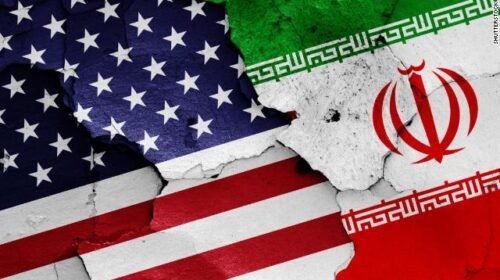
The ceasefire between US and Iran seems to have been completely abrogated as the two continue to engage in conflict despite peace efforts.
The Middle East lurched back toward all-out war on Tuesday after the United States launched fresh airstrikes on Iran after Tehran unleashed a barrage of missiles and drones against American military bases across the region, shattering a fragile ceasefire and reigniting fears of a global energy crisis.
With US President Donald Trump ordering the return of an American blockade around Iranian ports and threatening to charge ships for safe passage through the Strait of Hormuz, the world’s most critical oil chokepoint has once again become the epicentre of an explosive confrontation that could send oil prices soaring and drag the region into a wider conflict.
Hours after vowing to restore the blockade, the US military struck multiple targets in Iran, including what it called coastal defence systems and maritime assets. The Pentagon said the operation was aimed at crippling Iran’s ability to threaten commercial shipping in the Strait of Hormuz.
Tehran responded within hours. Missiles, drones and cruise missiles targeted American military installations in Bahrain, Jordan and Kuwait in one of Iran’s biggest retaliatory operations since the conflict erupted.
The Islamic Revolution Guards Corps (IRGC) claimed it struck the headquarters of the US Fifth Fleet in Bahrain, setting fuel depots ablaze and destroying radar installations, satellite communication centres and military facilities.
Iranian missiles also targeted American positions in Jordan, while waves of kamikaze drones reportedly slammed into US bases in Kuwait, hitting fuel storage tanks, Patriot missile batteries, ammunition depots and command centres. Iran’s Navy said it also fired cruise missiles at an American warship operating near Iranian waters.
The battle is now centred on the Strait of Hormuz, the narrow waterway through which nearly one-fifth of the world’s oil and gas supplies pass.
Tanker traffic through the Strait of Hormuz has nearly come to a standstill over the past 24 hours following the escalation of U.S. military attacks and Iran’s retaliatory actions, media reports said.
Iran had agreed to reopen the strait under a Pakistan-mediated peace deal signed last month. But Tehran now accuses Washington of violating that agreement by escorting ships through what it calls an illegal maritime corridor.
The White House also announced that ships seeking US naval protection through Hormuz would have to pay a fee amounting to 20 per cent of the value of their cargo—a major break from decades of US policy guaranteeing free navigation.
Iranian military spokesman Brigadier General Mohammad Akrami-Nia warned that no amount of military force would reopen the strategic waterway.
“The Strait of Hormuz will never be reopened through war or aggression,” he said, insisting that only US compliance with the peace agreement could restore normal shipping.