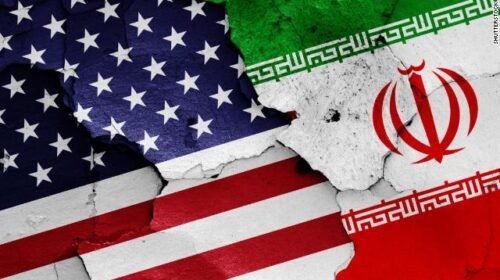
As the tensions between the US and Iran seemed to simmer down the latest developments indicate the revival of hostility between the two countries as US takes on a hard lined approach.
US president Donald Trump threatened to “blow up” Oman on Wednesday if it did not comply with his demands over the Strait of Hormuz.
“Oman will behave just like everyone else, or we’ll have to blow them up,” the president warned in an off-the-cuff remark about a key US ally during a Cabinet meeting at the White House on Thursday.
Trump reiterated his insistence that Oman and other nations sign on to the Abraham Accords, a US-led treaty brokered during his first term encouraging the normalization of diplomatic ties between Arab nations and Israel.
The US president’s remark was afterwards tweeted out by the State Department’s official account on X, confirming he had not mixed up the country with Iran – the type of mix-up he has made previously when referring to Greenland as “Iceland”.
The US president’s comments came after reports emerged in Iranian state media that Tehran and Oman had discussed a possible situation in which the two countries would manage shipping through the Strait of Hormuz after the war.
Iranian officials have discussed systems in which ships crossing the strait would pay a maritime service fee, which they say would be distinct from the idea of direct tolls for ships to transit through Hormuz.
But the White House has rejected suggestions that Iran or Oman could oversee the critical waterway.
“It’s international waters. Nobody’s going to control it. We’re going to watch over it,” he told the cabinet meeting.
The US president has also made clear his disappointment that several Middle Eastern nations are yet to sign the Abraham Accords.
The Gulf of Oman is the principal approach point to the Strait of Hormuz from the Arabian Sea, with the Muscat government therefore a crucial power in terms of regional shipping security.
Oman’s historical role as a mediator between Western countries and Tehran during times of tension has been critical in maintaining the free and safe passage of shipping through the strait.