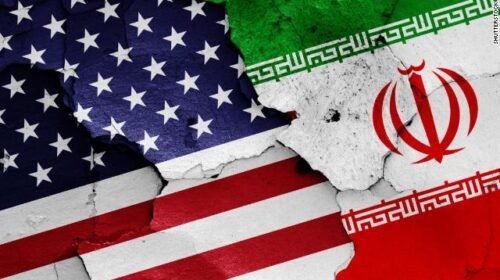
The relations between US and Iran appear to be improving after a conflict which could have proven bloody. Earlier a memorandum of understanding was signed between both sides which marked a ceasefire to the war.
The Trump administration temporarily lifted oil sanctions against Iran that could provide Iran with an economic boon after years of having to sell at a discount to buyers who risked conflict with the United States.
Treasury Secretary Scott Bessent said that the 60-day sanctions exemption, which authorizes the purchase of Iranian oil in U.S. dollars, was the result of “ongoing productive” talks with Iran in Bürgenstock, Switzerland.
Vice President JD Vance, said that Tehran had agreed to allow United Nations inspectors to visit Iran’s nuclear sites. He called that development “a major milestone for the American people and the first step in permanently ending a nuclear weapons program in Iran.”
President Trump posted on social media: “Everybody is fully aware that Iran will agree to have Major Weapons Inspections in order to ensure ‘Nuclear Honesty’ long into the future.”
At a news conference in Bürgenstock, Mr. Vance also described new lines of communication established to de-escalate tensions in the Strait of Hormuz and in Lebanon, where Israel and Hezbollah, the Iranian-backed militia, appear to have eased their attacks. Those two issues have complicated the delicate cease-fire between the United States and Iran.
Overall, Mr. Vance said, the negotiations with Iran that began on Sunday had set a “very good foundation” for a final peace deal. Qatari and Pakistani officials, who mediated the talks, said that encouraging progress has been made.
U.N. inspections of Iran’s nuclear sites and the lifting of American sanctions would effectively restore key parts of a nuclear agreement that the Obama administration struck with Iran in 2015.
Iran began limiting nuclear inspections after Mr. Trump withdrew from the 2015 nuclear accord. Iran then blocked I.A.E.A. inspectors from its nuclear sites after Israel and the United States bombed the sites during a 12-day war in June 2025.
Iran has reiterated that its nuclear program is only for civilian purposes and its president, Masoud Pezeshkian, said that Iran would “never back down” from its right to enrich uranium. The head of the I.A.E.A., Rafael M. Grossi, was in Bürgenstock over the weekend, speaking to Switzerland’s foreign minister.
The memorandum of understanding also committed the Trump administration to temporarily lifting U.S. sanctions on Iran’s oil industry that it had imposed to throttle Iran’s economy. On Monday, the Treasury Department issued a 60-day license allowing the production, delivery and sale of Iranian oil as part of that preliminary agreement.
The Trump administration had signaled that it was prepared to provide Iran with financial rewards if it reopened the Strait of Hormuz, a critical oil shipping route that Tehran effectively closed during the war, driving up global energy prices.