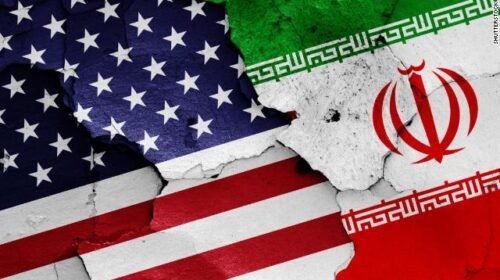
The armistice established between the US and Iran allowed for the Strait of Hormuz to be re-opened after nearly 3 months since the outbreak of the conflict. The Strait was closed by Iran following American attacks.
It has been reported that three supertankers from Saudi Arabia loaded with 6 million barrels of oil have crossed the Strait of Hormuz, according to data from the global trade intelligence firm Kpler.
The Saudi tankers were anchored in the gulf of Oman for more than two months. The crossings come after President Donald Trump and Iranian President Masoud Pezeshkian signed a deal Wednesday that is supposed to reopen Hormuz.
Vance said, “That is a high since the beginning of the conflict,” at a White House press briefing. Around 14 million barrels per day of oil and 6 million bpd of refined products passed through Hormuz before the war. U.S. Central Command later announced that the Navy had ended the blockade of Iran.
Matt Smith, director of commodity research at Kpler, said, “The floodgates haven’t opened, there is no mass exodus as yet,”. Shippers still appear hesitant to cross Hormuz, Smith said.
According to Lloyd’s List Intelligence, at least five Iranian ships have crossed the U.S. blockade line since June 16. Three vessels were state-owned oil tankers that exited the Gulf of Oman.
Once the shipping industry is confident of the Iran deal, 118 tankers stuck in the Persian Gulf could exit through Hormuz within 15 days, estimates Kipler. Within 30 days of the deal, a dozen tankers might enter the Gulf daily to fetch oil , which is still well below prewar levels, according to Kpler’s forecast.
The Joint Maritime Information Center downgraded its threat assessment for Hormuz to “substantial” from “severe” this week. The center is a U.S.-led maritime security organization headquartered in Bahrain that coordinates among allied navies and merchant ships in the Middle East.
The JMIC cautioned shippers that hostility remains and mines in the sea lane remain a threat. However, it noted the behavior of Iran’s Revolutionary Guard “has become less volatile” since Washington and Tehran announced their deal.