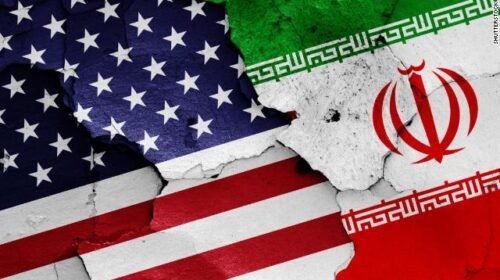
US-Iran war: US declares end to war with Iran over the Strait of Hormuz conflict.
The United States formally announced the conclusion of its large-scale military campaign against Iran, but tensions in the strategically vital Strait of Hormuz remain high, with the situation on the ground far from stable.
Speaking at the White House, US Secretary of State Marco Rubio confirmed that ‘Operation Epic Fury,’ a joint US-Israeli military offensive launched on February 28, had achieved its primary objectives and was now concluded. However, he stopped short of declaring an end to the broader conflict, leaving the door open for renewed escalation.
Rubio stressed that while active combat operations have ceased, the US is continuing to exert strategic pressure in the region. “We would prefer the path of peace,” he said, adding that Washington is not seeking further confrontation but remains prepared if tensions escalate again, particularly over Iran’s nuclear programme or disruptions in maritime routes.
Despite the announcement, US military presence in the region remains important. US forces continue to conduct escort and surveillance missions to safeguard commercial shipping through the Strait of Hormuz, a critical global oil transit chokepoint through which nearly 20 per cent of the world’s crude supply passes.
The ongoing operations fall under ‘Project Freedom,’ a US-led initiative aimed at restoring safe passage for commercial vessels after weeks of Iranian restrictions and naval standoffs. However, progress has been slow.
So far, only two commercial ships have reportedly navigated the secured corridor, while hundreds remain stranded in the Persian Gulf due to persistent security and insurance concerns. US Defence Secretary Pete Hegseth reiterated that Washington prefers a peaceful resolution but warned that forces remain on standby should the situation deteriorate.
Although a ceasefire agreement technically remains in place, developments on the ground suggest otherwise. The United Arab Emirates reported intercepting Iranian missiles and drones as recently as Tuesday, indicating ongoing hostilities. Iran, however, has denied involvement in the latest attacks.
Meanwhile, the United Nations Security Council is deliberating a new resolution, backed by the US and Gulf nations, calling on Iran to halt attacks on shipping and disclose the locations of alleged sea mines in the region. The proposed resolution may invoke enforcement provisions under Chapter VII of the UN Charter, potentially paving the way for sanctions or even military action if compliance is not met.
While Washington frames the end of ‘Operation Epic Fury’ as a strategic success, the fragile ceasefire and continued military activity suggest that the crisis in the Gulf is far from resolved.
Earlier Iranian Foreign Ministry spokesman Esmaeil Baghaei said that the United States has responded to Iran’s 14-point proposed plan to end the war. He made the remarks in an interview with state-run IRIB TV while noting that the US response is being reviewed. He stressed that Iran’s plan is exclusively focused on ending the war, and “nothing pertaining to the nuclear field’s details exists in it.”
“At present, we are focused on the parameters related to ending the war in the region, including Lebanon,” Baghaei added, stressing, “we have no nuclear negotiation at this stage.”
China-Iran alliance
China hosted Iran’s Foreign Minister Abbas Araqchi on Wednesday in his first visit since the outbreak of the US-Israel war.
Chinese Foreign Minister Wang Yi held talks with Araqchi, according to state-backed Xinhua News Agency, with Beijing having initiated the invitation. While no formal agenda was disclosed, Iran said discussions would cover bilateral ties as well as regional and international developments.
Analysts say the timing underscores growing coordination between Tehran and Beijing. “This meeting is deeply strategic,” said Amir Handjani of the Quincy Institute, noting that both sides appear to be aligning positions ahead of President Trump’s expected meeting with President Xi Jinping.